

Muzzleloader Ramrod Materials: Which Is Best?
May 7th 2026
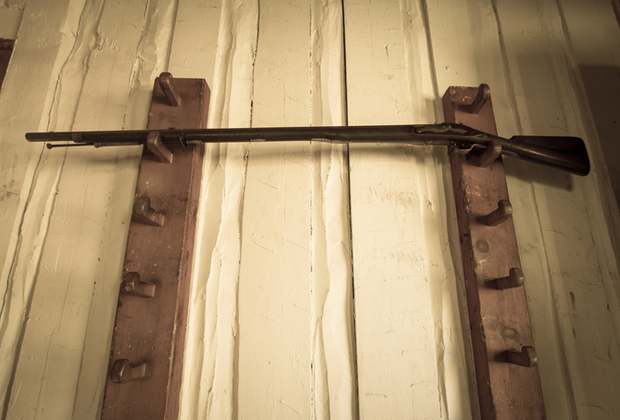
Muzzleloader seasons are relatively generous in many states, and some even allow muzzleloader hunting for certain species where centerfire hunting is not permitted.
Among other factors, this has caused the popularity of muzzleloaders to proliferate over the past couple of decades. Some states, like Pennsylvania, still have special seasons; for instance, the Keystone State is the last state with a flintlock-only season for deer.
Be that as it may, muzzleloader technology has expanded by leaps and bounds in the same timeframe, and there are now many instances of modern inline muzzleloaders that are easier to load, which use pre-measured pellets are propellant, and which shoot extremely accurate, full-bore bullets like Thor muzzleloader bullets.
But there are some things that just never change. For instance, muzzleloaders are all still front stuffers. That necessitates, among other things, muzzleloader bullet starters, and of course, muzzleloader ramrods.
The latter is one of the most critical of all muzzleloader accessories. Without a ramrod, or in the event that it breaks, you’ll be dead in the water.
Which is why we came up with the idea to post this article about different muzzleloader ramrod materials, where they shine, and where they’re not the best option. Start here and if you have any questions about ramrods, get in touch with us.
Wooden Muzzleloader Ramrods
Once upon a time all muzzleloader ramrods were made of wood. It is strong, in the pre-industrial era was abundant (and realistically, all they had) and easy to work with. Plus, if you’re smart about it, wooden ramrods do what they need to do.
Cheap and affordable, wooden ramrods remain popular, especially among sidelocks. Many caplocks and flintlocks are still sold with wooden ramrods, although modern ones may be pre-tipped with brass jags or even threaded to accept different muzzleloader accessories for loading and cleaning.
To be fair, wood is good, but only to a certain point. While wood is strong and light, if you grab the ramrod too far above the muzzle when loading and apply too much force, you’re liable to break the ramrod. This is especially true if there is any grain runout in the ramrod, if you slip, or if you accidentally bend the ramrod to the side.
Therefore, it is critical to pay close attention when loading with a wooden ramrod, and to make sure that you never grasp it more than 6 inches above the muzzle when driving a ball or bullet home.
It’s also true that wooden ramrods, like wooden muzzleloader stocks, can also rot if not properly cared for. They’re also prone to UV-related degradation, although that is honestly only a minor concern.
Still, breakage with a wooden ramrod can be a serious problem. That’s why modern muzzleloader manufacturers came up with fiberglass ramrods.
Fiberglass Muzzleloader Ramrods
Fiberglass ramrods were the next iteration in the world of muzzleloader ramrods and represent a significant foray into the capabilities of modern synthetic materials.
Like wood, fiberglass is light and strong. In most cases, it is even stronger than wood. Unlike wood, however, fiberglass will not rot, which puts it on a superior footing when it comes to maintenance.
The main thing here is the flexibility of fiberglass. As stated, wooden muzzleloader ramrods are liable to break if stressed, specifically if bent past a certain point.
Fiberglass is much more flexible than most species of wood, and in the same cases it is generally stronger, too. Some fiberglass ramrods can be bent almost double without breaking.
However, don’t let fiberglass ramrod manufacturers pull the wool over your eyes. Fiberglass absolutely can break, and if you stress a fiberglass ramrod sufficiently, it will crack or shatter into a bunch of fibers. Adequately stressed and fiberglass will break even more spectacularly than wood.
So, while fiberglass muzzleloader ramrods do solve some of the problems of wood, they are not a panacea. They are still bounded by some constraints.
Aluminum Muzzleloader Ramrods
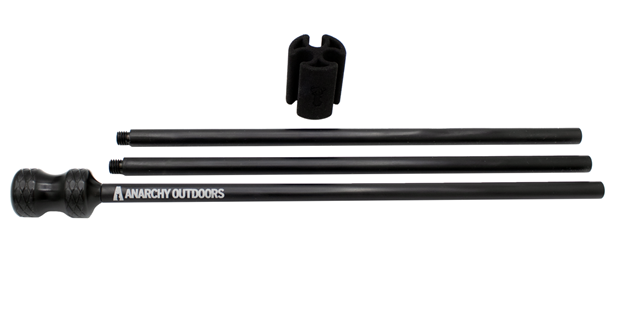
In the modern era, fiberglass is not the only material that is available for making muzzleloader ramrods. Many are also made from aluminum.
Like fiberglass, and like some species of wood, aluminum is very light. This makes it an exceptional material for a ramrod as it won’t significantly increase the weight of your loadout.
Unlike fiberglass and wood, aluminum will not break; at least, it will not crack or shatter the way the former two materials do. Aluminum muzzleloader ramrods can bend if they are several stressed, however, this issue is extremely rare and you would need to put serious force on the ramrod to do so. Truthfully you would have to try to get it to bend.
Aluminum is also corrosion resistant and effectively impervious to the elements, unlike wood, which makes it an exceptionally good material for making ramrods.
One Piece or Multi-Piece Muzzleloader Ramrods?
Aluminum muzzleloader ramrods also create another element of flexibility here. Since aluminum can be threaded, you have the option to buy not only one-piece but multi-piece aluminum ramrods that can be broken down and stored in a pack or possibles bag.
It is true that one-piece ramrods will invariably be stronger than multi-piece ramrods, and since there is usually a slot for them out of the barrel, they can be stored out of the way. Nonetheless, the modularity of multi-piece ramrods makes them a very attractive option for carrying a spare.
One Is None and Two Is One: Carry a Spare Muzzleloader Ramrod
One of the biggest draws of multi-piece aluminum muzzleloader ramrods, such as the 3-piece ramrods that we sell here, is that they easily enable you to carry a spare.
A spare can be indispensable because if for any reason you lose, break or bend your primary ramrod, you won’t be able to load your muzzleloader until you get a replacement. Worse, unless you have a silent ball discharger, you won’t even be able to unload it.
Our counsel is this: one is none and two is one. Get a spare muzzleloader ramrod, preferably a multi-piece ramrod that you can break down, and keep it in your pack as a backup. You never know what will happen out there.